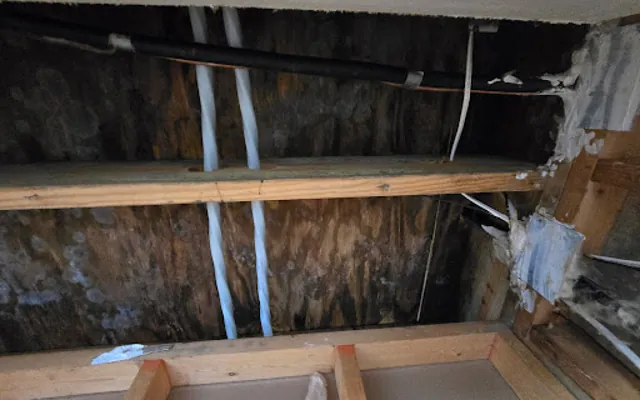
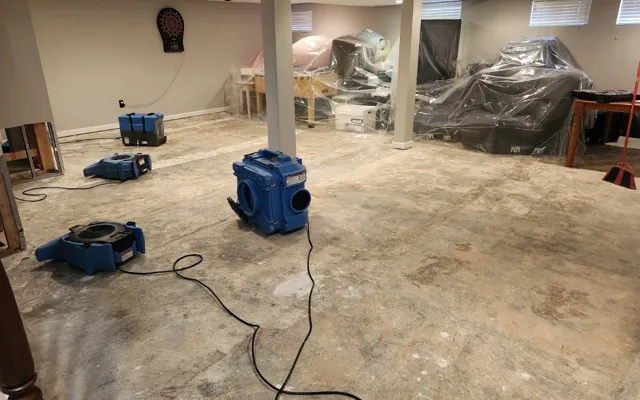
Attic water damage strikes Old Town homes built in the early 1900s with surprising speed, especially when original cast-iron drains fail or wind-driven rain exploits roof vulnerabilities. The IICRC-standard crews respond locally to trace damage, extract saturated insulation, and dry structural members safely.

Crews enter the attic with ladder and safety gear, locate where water is pooled or dripping through ceiling drywall below, photograph the path and damage extent, and check insulation saturation and framing for rot or soft spots.
Blown-in or batt insulation soaked beyond recovery is carefully bagged and disposed of following local code. Crews extract standing water using submersible pumps, squeeze out trapped moisture from accessible decking, and inspect top plates and rafters for structural compromise.
Industrial dehumidifiers and air movers run continuously, targeting exposed framing and decking. Moisture readings are tracked daily until all readings stabilize in the safe zone and attic humidity matches the rest of the home.

Attic water damage cleanup in Old Town typically runs $1,800 to $6,500, depending on how much insulation and decking needs replacing and whether the ceiling drywall below is also affected. Storm-related roof damage often adds a separate roofing repair line. Most homeowner's policies cover sudden wind-driven leaks, and crews document the source and extent so your adjuster can move the claim along.
Old Town's historic grid of early-1900s cottages and small homes sits close to downtown Beaumont, where aging cast-iron and galvanized plumbing corrodes from inside walls before any warning signs appear. When corroded pipes fail or roof leaks develop during hurricane season, water pools in attics and soaks into blown-in insulation and decking within hours, creating mold risk and structural danger. Old Town's original plumbing runs original galvanized and cast-iron lines that corrode from inside long before leaks appear externally, and flat roofs on some period homes concentrate water during Beaumont's tropical storms, while tight attic framing traps moisture and feeds mold growth. From Old Town, crews also cover nearby South End, Calder, Pine Crest, North End, Amelia, Caldwood. See every neighborhood and town on the full service area page.
See all areas servedEvery loss is photographed, measured, and logged from the first visit, so the paperwork holds up with your insurance carrier.
Technicians follow recognized IICRC drying standards and prove the work with daily moisture readings, not guesswork.
Emergency dispatch any hour of the day or night, with a real crew on the way, not a callback in the morning.
A real crew dispatched any hour, not a callback in the morning.
Trained technicians following recognized IICRC drying standards.
Truck-mounted, portable, and submersible for any size loss.
The loss is documented and billed to the carrier directly.
Old Town houses from the 1900s have original cast-iron drain lines and galvanized supply lines that corrode inside the walls; the owners often don't realize there's a problem until water appears upstairs during a storm or heavy use. Early 1900s roof framing also concentrates water during Beaumont's heavy rainfall events.
Most homeowner's policies cover sudden, accidental water damage like burst pipes, failed supply lines, or storm-driven roof leaks. Crews photograph and document the loss source, water extent, and drying progress so your adjuster can move the claim quickly; crews work with most carriers.
Crews are on call 24 hours a day and can be on the way to Old Town within the hour.
Call (409) 407-5196