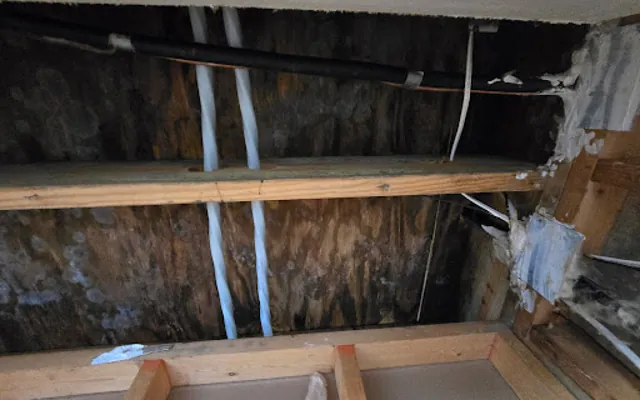
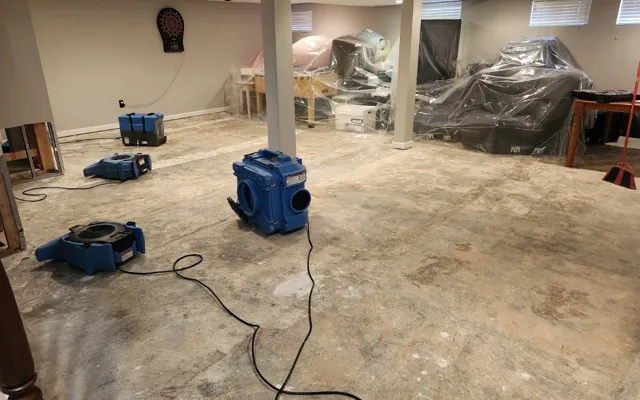
South End's newer slab-on-grade homes face attic water damage from tropical storms and construction-era roof design flaws that concentrate wind-driven rain. The IICRC-standard crew responds fast to extract moisture, dry framing, and restore safety.

Crews inspect the full attic extent, locate water sources and pooled areas using moisture meters and thermal imaging, photograph the damage, and check for water contact with electrical systems or mechanical equipment.
Submersible pumps and wet vacuums remove all standing water. Saturated blown-in insulation is bagged and hauled away. Crews inspect all rafter framing and decking for soft spots, wood rot, or structural compromise.
Heavy-duty dehumidifiers and air movers are deployed in the tightest attic sections where air circulation is poorest. Moisture levels are checked daily until all readings stabilize safely and the attic humidity matches the home's occupied spaces.

Attic water damage cleanup in South End typically runs $1,800 to $6,500, depending on how much insulation and decking needs replacing and whether the ceiling drywall below is also affected. Storm-related roof damage often adds a separate roofing repair line. Most homeowner's policies cover sudden wind-driven leaks, and crews document the source and extent so your adjuster can move the claim along.
South End's postwar slab-on-grade tract housing was built with economy-grade roofing and roof designs that concentrate water in valleys and low spots during Beaumont's heavy tropical downpours and hurricane-force winds. Attics in these homes are tightly framed and often under-ventilated, so any water intrusion becomes a mold risk within hours. South End's postwar homes have economy-grade composite roofing and interior roof valleys that concentrate water during Beaumont's intense tropical rainfall and wind events, tight attic framing with minimal ventilation traps moisture quickly, and year-round Gulf Coast humidity accelerates mold growth. From South End, crews also cover nearby Calder, Pine Crest, North End, Amelia, Caldwood, West End. See every neighborhood and town on the full service area page.
See all areas servedEvery loss is photographed, measured, and logged from the first visit, so the paperwork holds up with your insurance carrier.
Technicians follow recognized IICRC drying standards and prove the work with daily moisture readings, not guesswork.
Emergency dispatch any hour of the day or night, with a real crew on the way, not a callback in the morning.
A real crew dispatched any hour, not a callback in the morning.
Trained technicians following recognized IICRC drying standards.
Truck-mounted, portable, and submersible for any size loss.
The loss is documented and billed to the carrier directly.
South End's postwar homes have economy-grade roofing and tighter attic framing without the ventilation of older homes. Roof valleys and low spots in these designs concentrate water during Beaumont's heavy downpours, so maintenance and regular roof inspections are especially important.
Beaumont's year-round humidity extends drying time significantly. Most attic jobs take 4-7 days of continuous dehumidification before moisture readings stabilize; crews check daily and only give you the all-clear when all readings confirm structural safety.
Crews are on call 24 hours a day and can be on the way to South End within the hour.
Call (409) 407-5196