Beaumont has weathered Harvey, Imelda, Rita, and Laura, and each one proved how fast Gulf storm surge and torrential rain can flood a home. Crews respond in about an hour when it is safe, IICRC-standard, for full storm and flood cleanup.

Once conditions are safe, crews assess wind and water damage together and begin extracting standing floodwater with truck-mounted equipment right away, checking every affected area carefully before moving on to the next step.
Storm debris, mud, and contaminated flood materials are removed and disposed of properly, including damaged roofing and saturated insulation throughout, so nothing gets missed before the next phase of the job begins.
Because storm surge and floodwater are category 3 contaminated water, all affected surfaces are cleaned thoroughly with antimicrobial treatment, with results checked and confirmed before any further work continues onward.
The structure is dried to a verified target, then roofing, drywall, flooring, and trim are rebuilt completely to restore the damaged home, and every step is documented clearly for your records and your adjuster.
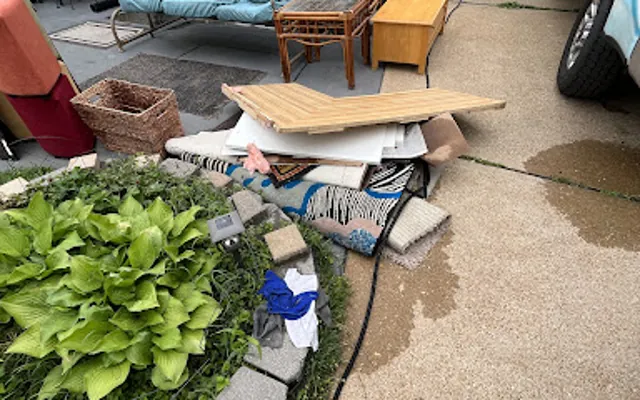
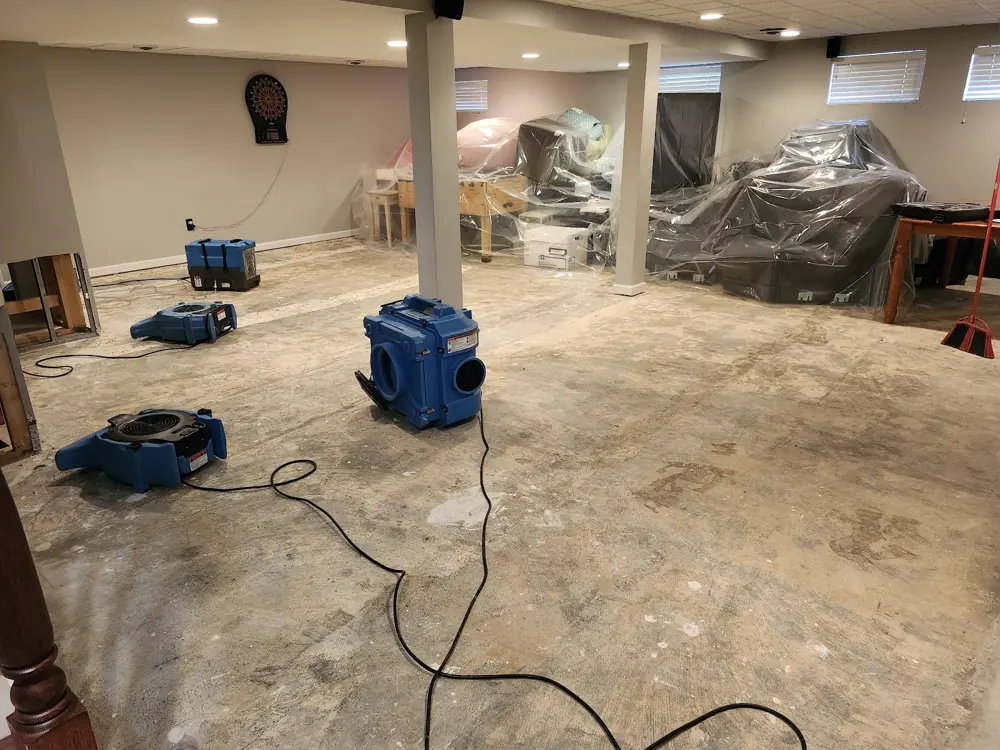
While help is on the way, these first steps, done only where it is safe, limit the damage and protect the insurance claim.
Shut the supply off at the source, or close the home's main valve if the source is not obvious. Stopping the flow limits the damage more than anything else.
Switch off electricity to the affected area, but only if the breaker can be reached without standing in or touching the water.
Get a crew dispatched right away. The sooner extraction and drying begin, the more flooring, drywall, and belongings can be saved.
Take photos and a short video of the water and the affected rooms before anything is moved, so the insurance claim starts strong.
Hurricane and flood damage restoration in Beaumont varies widely, typically running $3,000 to $15,000 or more depending on whether the damage involves wind-driven roof leaks, ground-level flooding, storm surge, or a combination of all three. Standard homeowner policies generally cover wind damage but exclude outside flooding without a separate flood policy, so crews document wind and water damage separately to support whichever coverage and FEMA assistance applies.
Crews reach Beaumont and the Golden Triangle fast, from Old Town and Calder to Pine Crest, North End, West End, and nearby Vidor and Nederland. See the full list on the areas served across Beaumont page.
See all areas servedEvery loss is photographed, measured, and logged from the first visit, so the paperwork holds up with your insurance carrier.
Technicians follow recognized IICRC drying standards and prove the work with daily moisture readings, not guesswork.
Emergency dispatch any hour of the day or night, with a real crew on the way, not a callback in the morning.
A real crew dispatched any hour, not a callback in the morning.
Trained technicians following recognized IICRC drying standards.
Truck-mounted, portable, and submersible for any size loss.
The loss is documented and billed to the carrier directly.
Wind damage, such as a roof torn off by hurricane-force winds, is typically covered under a standard homeowner's policy. Flooding from storm surge or rising water, even during the same hurricane, usually requires a separate flood insurance policy, so crews document wind and water damage separately.
Clear gutters and drains, secure or bring in loose outdoor items, and consider flood barriers for low entry points if your home has flooded before. Photograph your home's condition beforehand, since before-and-after documentation makes any resulting claim much easier to process.
Crews respond as soon as it is safe for the crews to travel, which is often within a day of a storm passing, and crews prioritize homes with active flooding or severe structural exposure. During major regional storms, response may be staged based on road conditions and safety.
Both are treated as category 3 contaminated water requiring full sanitizing, but storm surge often carries additional debris, chemicals, and salt content from the Gulf that rainfall flooding does not, which can add to the materials that need to be removed rather than dried.
Most hurricane damage is fully repairable, from wind-torn roofing to flooded ground floors, when extraction, drying, and sanitizing happen promptly. The scope of rebuild depends heavily on how long floodwater sat and how much of the structure absorbed it before crews arrived.
Crews provide detailed documentation of the damage, including photos, moisture readings, and a description of the cause and timeline, which homeowners can use to support both an insurance claim and a FEMA assistance application when a storm is declared a federal disaster.
Beaumont crews are on call 24 hours a day, local and fast, and can be on the way within the hour.
Call (409) 407-5196