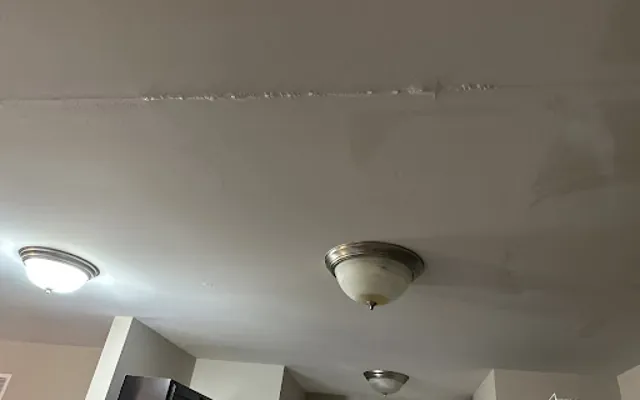
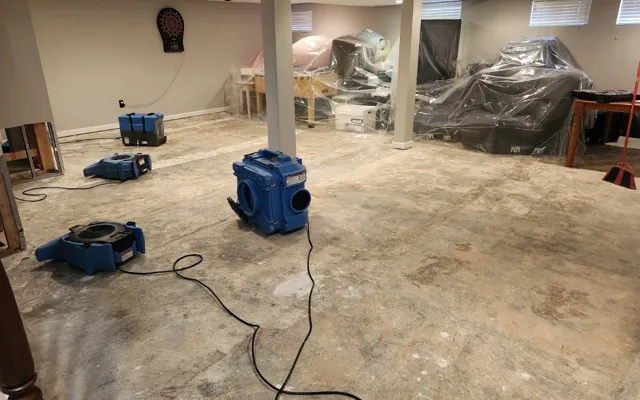
North End spans decades of single-family construction on slab foundations with original cast-iron and galvanized plumbing still in service, creating steady ceiling water damage calls from burst pipes and slab leaks. When water pools overhead, it spreads fast in the humid Gulf air. The IICRC-standard crews arrive immediately to extract, dry, and restore your ceiling perfectly.

Crews pinpoint the exact water entry point, whether a roof leak, a burst pipe, a fixture failure, or an HVAC condensate line, before opening any drywall or removing insulation.
Standing water is removed quickly using submersible pumps and extraction equipment, and the area below is protected with plastic barriers to prevent secondary damage to flooring and contents.
Air movers and commercial dehumidifiers run around the clock until moisture levels drop to IICRC-safe ranges, typically over four to seven days of continuous operation and daily monitoring.

Ceiling water damage repair in North End generally runs $900 to $4,500, depending on the size of the stained area, whether insulation above needs replacing, and how much drywall and texture work is required. Larger two-story leaks from an upstairs bathroom run toward the higher end. Coverage depends on whether the cause was sudden or a long-term slow leak.
North End is one of Beaumont's larger and older districts, spanning decades of residential development on slab-on-grade foundations where the original plumbing crew is showing its age. With that much housing stock built on cast-iron drains and galvanized supply lines still functioning decades later, burst pipes, slab leaks, and sewer backups occur regularly across this wide, well-established neighborhood. North End's vast aging plumbing infrastructure creates a constant stream of failures from corroded cast-iron drains and galvanized supply lines that have been in service for decades. Slab leaks force water upward into ceiling cavities, and the flat terrain means heavy Gulf rains and storm surge contribute roof leaks and drainage backups. From North End, crews also cover nearby Calder, Pine Crest, Amelia, South End, Caldwood, West End. See every neighborhood and town on the full service area page.
See all areas servedEvery loss is photographed, measured, and logged from the first visit, so the paperwork holds up with your insurance carrier.
Technicians follow recognized IICRC drying standards and prove the work with daily moisture readings, not guesswork.
Emergency dispatch any hour of the day or night, with a real crew on the way, not a callback in the morning.
A real crew dispatched any hour, not a callback in the morning.
Trained technicians following recognized IICRC drying standards.
Truck-mounted, portable, and submersible for any size loss.
The loss is documented and billed to the carrier directly.
Original supply lines routed under the slab have corroded from the inside out over decades, and expansion and contraction from temperature changes creates cracks and pinholes. Once a leak starts, water pressure forces it upward into the ceiling above, spreading damage rapidly.
Soft spots in drywall, brown stains, musty smells, and sagging are visible signs. Crews can use moisture detection equipment to check the framing for water even before stains appear. Early discovery saves thousands in mold remediation costs.
Crews are on call 24 hours a day and can be on the way to North End within the hour.
Call (409) 407-5196